

First-Time Buyers: FHA vs. Conventional Loans - Which Is Right for You?
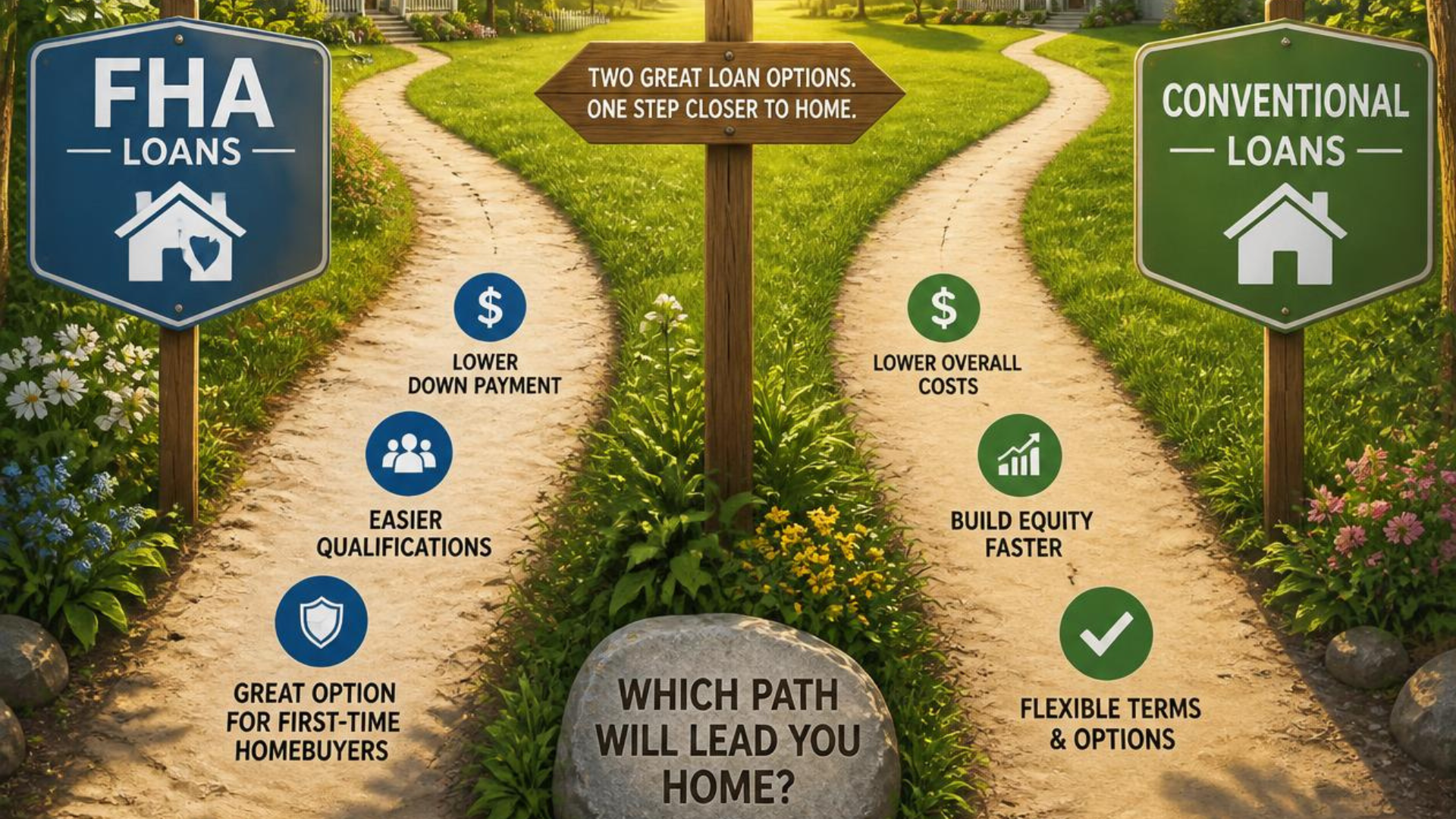
When you are purchasing your first home, choosing the right mortgage program can feel like learning a completely different language. The two most common paths for first-time buyers are FHA (Federal Housing Administration) loans and Conventional conforming loans. Understanding how their underwriting rules, down payment options, and mortgage insurance structures differ can save you thousands of dollars over the life of your loan.
Credit Score Flexibility
Your credit score is often the deciding factor in which loan program fits you best.
- FHA Loans: FHA-backed loans are famously lenient with credit histories. If your credit score is 580 or higher, you can qualify for the minimum down payment of 3.5%. If your score is between 500 and 579, you can still qualify, but you will need to make a 10% down payment. Keep in mind that individual lenders often set their own "overlays" (stricter internal rules) and may require a minimum score of 580 or 600 regardless of the program's base limits.
- Conventional Loans: Conventional mortgages are private transactions governed by Fannie Mae and Freddie Mac guidelines. For manually underwritten conventional loans, the minimum credit score is 620. While Fannie Mae's automated Desktop Underwriter (DU) system evaluates your overall financial profile rather than enforcing a hard score cutoff, standard market practice still strongly adheres to the 620 credit baseline.
Debunking the 20% Down Payment Myth
You do not need to save a massive 20% down payment to purchase a home.
- Conventional 3% Down Pathways: Fannie Mae and Freddie Mac back several specialized low-down-payment programs that require only 3% down. The Standard Conventional 97% LTV program is open to any transaction where at least one borrower is a first-time homebuyer (defined as not owning a home in the last three years). Income-focused programs like Fannie Mae’s HomeReady and Freddie Mac’s Home Possible also allow 3% down for buyers whose income is at or below 80% of their Area Median Income (AMI).
- FHA Low Down Payment: The minimum down payment for an FHA loan is 3.5% for borrowers with a credit score of 580 or higher. FHA has no income limits, making it a great fallback if you make too much money to qualify for HomeReady or Home Possible but still want a low down payment.
PMI vs. MIP: How Mortgage Insurance Differs
Because low-down-payment loans represent higher default risks for lenders, both FHA and conventional loans require mortgage insurance. However, the cost structures and cancellation criteria are completely different.
- Conventional Private Mortgage Insurance (PMI): On a conventional loan, PMI is highly personalized. Premiums range from 0.46% to 1.50% of the loan amount annually, depending on your credit score, debt-to-income (DTI) ratio, and exact down payment size.
- Credit Impact: If your score is 780, your PMI rate can be as low as 0.30%; if your score is 620, it can skyrocket to 1.27%.
- Cancellation: Under the Homeowners Protection Act of 1998, PMI is temporary. Your lender must automatically cancel PMI once your loan balance is scheduled to reach 78% of the original property value, or you can request cancellation once you reach 80% LTV through principal payments or home appreciation.
- FHA Mortgage Insurance Premium (MIP): FHA uses a rigid, dual-premium system that does not change based on your personal credit score. All FHA forward mortgages require:
- An Upfront MIP (UFMIP): A one-time fee of 1.75% of your base loan amount, charged at closing. Most borrowers choose to finance this fee directly into their total loan balance.
- An Annual MIP: Paid in monthly installments. Thanks to a HUD rate reduction, the standard annual MIP rate is 0.55% of the outstanding balance for most standard 30-year fixed loans with 3.5% down.
- Strict Duration Rules: Unlike conventional PMI, FHA MIP does not automatically cancel at 20% equity. If your down payment is less than 10% (meaning your initial LTV is greater than 90%), you must pay MIP for the entire life of the loan. The only way to stop paying it is to sell the home or refinance into a conventional mortgage later. If you put 10% or more down, the MIP will end automatically after 11 years.
Choosing Your Best Financing Path
If your credit score is above 720 and you can put at least 5% down, a conventional mortgage with PMI is almost always mathematically superior. Your mortgage insurance will be cheaper from day one and will eventually fall away, saving you thousands of dollars without forcing you to refinance.
However, if your credit score is below 680 or you have a higher DTI ratio, FHA’s flat-rate MIP is often significantly more affordable on a monthly basis than high risk-based conventional PMI premiums. In this scenario, the smartest strategic pathway is to utilize the FHA loan to buy your home, build up your equity to 20% over a few years, and then refinance into a conventional loan to shed the MIP permanently.